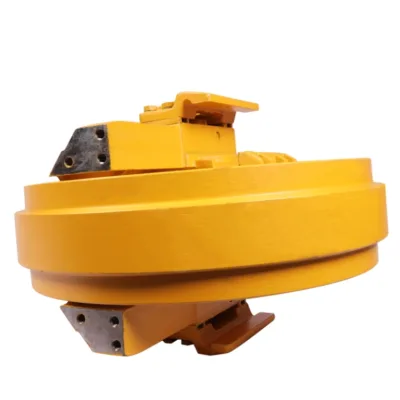
Source Bulldozer Track Guide Wheel for Excavators, Mining, Earthmoving
Compare 13 verified listings for the bulldozer track guide wheel from Chinese manufacturers. Buyers can evaluate specifications, customization options, and delivery times for construction and mining applications.
Key considerations
Products List




Comprehensive Sourcing Guide
Strategic Sourcing Guide for Bulldozer Track Guide Wheels
Navigating the global market for heavy machinery components requires a disciplined approach, particularly when sourcing critical undercarriage parts like the bulldozer track guide wheel. This component is essential for maintaining track tension and alignment, ensuring the stability and efficiency of the entire machine during operation. For procurement professionals, the objective is to identify reliable supply chains that deliver components meeting rigorous technical and safety standards without compromising on cost or delivery timelines. This guide synthesizes available market data and industry knowledge to provide a structured framework for evaluating potential suppliers and products.
Technical Specifications and Material Composition
The performance of a bulldozer track guide wheel is fundamentally dictated by its material composition and manufacturing process. In the current market, high-quality guide wheels are frequently constructed from specialized steel alloys, such as 40mn2, which offer an optimal balance of strength and toughness. The manufacturing technique often involves a combination of forging and casting processes to ensure the structural integrity of the component. Forging, in particular, is a preferred method for creating the core structure, as it aligns the grain structure of the metal, enhancing its resistance to impact and fatigue.
Heat treatment is a critical step in the production lifecycle. To achieve the necessary durability, components undergo high-frequency quenching. This process is designed to increase surface hardness while maintaining a tough core. Buyers should verify that the supplier can provide data confirming a hardness depth ranging between 8 and 12mm, with a surface hardness (HRC) typically falling within the 55-60 range. These specific metrics are crucial for preventing premature wear and deformation under the extreme loads encountered in construction and mining environments.
The physical dimensions of the guide wheel must align precisely with the specific model of the bulldozer. Compatibility is a primary concern, with common models including the D20, D5, D6H, D7, and Cat374. The track pitch, which is the distance between the centers of adjacent track pins, is another vital specification. Market observations indicate that compatible guide wheels often support a track pitch range of 90 mm to 592 mm. When sourcing, it is imperative to cross-reference the machine's model number with the supplier's catalog to ensure the pitch and mounting dimensions match exactly. A mismatch in these specifications can lead to track derailment and catastrophic machine failure.
Compliance, Certification, and Quality Standards
In the B2B procurement of industrial machinery parts, certification serves as a proxy for a supplier's commitment to quality management systems. The most prevalent certifications observed in this sector include CE and ISO9001. The ISO9001 certification indicates that the manufacturer adheres to international standards for quality management, ensuring consistent production processes. The CE marking signifies compliance with health, safety, and environmental protection standards for products sold within the European Economic Area, though it is often adopted globally as a benchmark for safety.
Buyers must verify that the certification documents are current and valid for the specific product line being purchased. While many suppliers claim to hold these certifications, the verification process should involve checking the certificate numbers against the issuing bodies. Additionally, the production standard should align with export standards, ensuring that the goods are packaged and manufactured to withstand international logistics. Some suppliers may offer customization based on customer requests, which requires a robust quality control framework to ensure that non-standard modifications do not compromise the part's integrity.
The condition of the product is another critical compliance factor. The market standard for new guide wheels is "New," meaning they are manufactured specifically for the current order and have not been previously installed or refurbished. Procurement contracts should explicitly state that the goods must be new, as the presence of used or refurbished parts can significantly alter the expected lifespan and performance of the undercarriage system.
Cost Drivers and Pricing Dynamics
Understanding the cost structure of bulldozer track guide wheels is essential for budgeting and negotiation. The observed price range in the market is broad, spanning from approximately 20 to 5000 USD. This variance is driven by several factors, including the specific model compatibility, the volume of the order, the material grade used, and the level of customization required. High-performance models designed for heavy-duty mining applications or those requiring specific custom dimensions will naturally command a higher price point compared to standard replacement parts for common construction models.
The Minimum Order Quantity (MOQ) is a significant driver of unit cost. Suppliers typically offer flexible MOQs ranging from 1 piece to 100 pieces. For buyers requiring a single replacement part, the unit price will be higher due to the fixed costs of setup and logistics. Conversely, bulk orders allow suppliers to optimize production runs, often resulting in a lower per-unit cost. Buyers should evaluate their inventory needs carefully; purchasing in larger quantities may reduce the total cost of ownership, even if the upfront capital outlay is higher.
Other cost drivers include the payment terms and the logistics involved. Standard payment terms often require a 30% T/T advance with the balance due before shipment. This structure protects the supplier against non-payment while ensuring the buyer receives the goods. Transportation costs, particularly for heavy steel components, can also impact the final landed cost. Sea freight is the primary mode of transportation for these goods, with major ports like Xiamen serving as key shipping hubs. Buyers should factor in potential freight fluctuations and insurance costs when calculating the total procurement budget.
Typical Applications and Operational Context
Bulldozer track guide wheels are integral to a wide range of heavy machinery applications. The primary use cases include construction, earthmoving, and mining operations. In construction sites, the guide wheel ensures that the bulldozer maintains a straight path while pushing soil or debris, which is critical for grading accuracy. In earthmoving projects, the component must withstand the constant vibration and shock loads associated with digging and moving large volumes of material.
The mining sector presents the most demanding environment for these components. In mining, bulldozers operate continuously in harsh conditions, often dealing with abrasive rocks and extreme temperatures. The durability of the guide wheel is paramount in this context, as downtime for undercarriage repairs can result in significant financial losses. The guide wheel must maintain its structural integrity and track alignment to prevent the machine from becoming immobilized.
The color of the guide wheel, often available in black or yellow, is primarily an aesthetic choice or a safety feature for visibility on site. While the color does not affect performance, it is a standard attribute that buyers may request to match the existing fleet or site safety protocols. The "Original product" designation is also a key selling point, suggesting that the part is manufactured to the original equipment manufacturer (OEM) specifications, ensuring a perfect fit and optimal performance.
Supplier Evaluation and Operational Capabilities
Evaluating a supplier requires a holistic view of their operational capabilities, including production capacity, lead times, and quality assurance processes. The production origin is a key factor, with many high-quality components sourced from China, specifically from regions like Quanzhou and Jining. These regions have established industrial clusters for heavy machinery parts, offering a competitive advantage in terms of cost and supply chain efficiency.
Lead time is a critical metric for procurement planning. Suppliers typically offer delivery times ranging from 10 days to 30 days, depending on the order size and customization requirements. For standard items, a lead time of around 10 days is common, while custom orders or larger batches may require 25 to 30 days. Buyers must align their project timelines with these delivery windows to avoid production delays.
Video outgoing-inspection is a feature that some suppliers may offer, but it is not universally available. If this service is critical for the buyer's quality assurance process, it must be explicitly requested and confirmed before placing an order. The absence of video inspection does not necessarily indicate poor quality, but it does shift the burden of verification to the buyer or a third-party inspection agency.
When evaluating suppliers, buyers should also consider the warranty period. Standard warranties for these components range from 3 months to 12 months. A longer warranty period often indicates the supplier's confidence in the product's durability. However, the specific terms of the warranty, including what constitutes a valid claim and the process for replacement, must be clearly understood.
Quality Control and Long-Term Procurement Strategy
Effective quality control is the backbone of a successful procurement strategy for heavy machinery parts. Buyers should insist on a comprehensive quality control process that includes material testing, dimensional inspection, and hardness verification. The finish of the product should be smooth, free from defects, and consistent with the specified standards. The use of standard exporting packing, such as cartons, export wooden pallets, or plywood cases, is essential to protect the component during transit.
For long-term procurement, building a relationship with a reliable supplier is more beneficial than seeking the lowest initial price. A supplier that offers customization, such as specific model numbers or modified dimensions, can provide greater flexibility for future projects. The ability to source parts with a track pitch ranging from 90 mm to 592 mm ensures that the buyer can service a diverse fleet of machinery.
Buyers should also consider the availability of spare parts and the ease of installation. Products described as "convenient for installation and fast" can reduce machine downtime and labor costs. The brand name, such as Jining Kawo, may be a factor in brand recognition and trust, but the technical specifications and certifications remain the primary indicators of quality.
In conclusion, sourcing bulldozer track guide wheels requires a meticulous approach that balances technical requirements, cost considerations, and supplier reliability. By focusing on material quality, certification compliance, and operational capabilities, buyers can secure components that ensure the longevity and efficiency of their heavy machinery fleets. The broad range of options available in the market, from standard models to customized solutions, allows for tailored procurement strategies that meet the specific needs of various industries.
| Specification Category | Observed Market Range / Standard | Verification Requirement |
|---|---|---|
| Material | 40mn2 Steel | Verify material certificate |
| Hardness (HRC) | 55-60 | Request hardness test report |
| Hardness Depth | 8-12mm | Confirm heat treatment specs |
| Track Pitch | 90 mm – 592 mm | Match with machine model |
| Warranty | 3 Months to 12 Months | Review warranty terms |
| Lead Time | 10 to 30 Days | Confirm production schedule |
| Certification | CE, ISO9001 | Validate certificate numbers |
| Origin | China (Quanzhou, Jining) | Verify shipping documents |
| Condition | New | Inspect upon receipt |
| Packing | Carton, Wooden Pallet, Plywood Case | Check packaging integrity |
FAQs
What certifications do bulldozer track guide wheels typically have?
These wheels commonly hold CE and ISO9001 certifications to ensure quality management and safety standards. Buyers should verify that the specific product line holds valid, current certificates before purchasing to guarantee compliance with international requirements.
Which material is used for manufacturing these guide wheels?
High-quality guide wheels are frequently constructed from specialized steel alloys like 40mn2 for optimal strength. The manufacturing process often combines forging and casting to ensure structural integrity and resistance to impact during heavy operations.
Can buyers request custom specifications for these components?
Yes, customization is available to meet specific customer requests regarding dimensions or models. Suppliers can produce parts based on unique requirements while maintaining export standards, provided the buyer confirms the necessary details before production begins.
How long is the delivery time for these parts?
Standard delivery times range from 10 days to 30 days depending on order size and customization. Buyers should plan their procurement timeline accordingly, as custom orders or larger batches may require the longer end of this delivery window.
What is the minimum order quantity for purchasing these wheels?
The minimum order quantity typically ranges from 1 piece to 100 pieces depending on the supplier. Single item purchases are possible, though bulk orders often result in lower per-unit costs due to optimized production runs.
Which bulldozer models are compatible with these guide wheels?
Compatible models include D20, D5, D6H, D7, and Cat374 with track pitches between 90 mm and 592 mm. Buyers must cross-reference their machine model number with the supplier catalog to ensure exact pitch and mounting dimension matches.
What warranty period is offered for these new parts?
Warranty periods typically range from 3 months to 12 months depending on the specific supplier and product. A longer warranty often indicates the supplier's confidence in the product's durability and resistance to wear in harsh environments.